Menteezy (Mentor OS)
0 to 1 Product Design

Overview
Menteezy (name changed due to NDA) was an MVP platform built for mentors and creators to create, manage and publish online courses.
The student facing learning platform already existed.
What didn't exist was everything required to power it behind the scenes.
Our goal was to launch quickly while validating whether mentors would actually adopt the platform.
The Opportunity
The business had already solved one side of the marketplace. Students could browse and consume content.
Mentors still had no dedicated workspace to:
create courses
upload lessons
organize learning material
publish content
eventually monetize it
Without solving this problem, the marketplace couldn't scale.
The Challenge
Unlike redesigning an existing product, we weren't improving workflows, but defining them from scratch.
Some constraints included:
extremely short launch timeline
evolving product requirements
technical constraints from engineering
maintaining consistency with the existing student LMS
designing a system flexible enough for future mentor tools
At the same time, marketing needed something immediately. So alongside the product, I also designed:
landing page
waitlist experience
signup flow
to begin validating interest before the product was ready.
My Role
I owned the UX and UI for the mentor-facing MVP.
This included:
information architecture
low-fidelity workflows
high-fidelity product design
component library
design tokens
basic visual identity
landing page
waitlist flow
Understanding the Product
The first task for us was defining: What does a mentor actually need to do?
Working closely with the founders and engineering, we mapped the smallest viable workflow. For V1 we deliberately narrowed scope to one core task:
Creating and publishing courses.
This allowed the team to validate the platform without building unnecessary functionality.
Designing the Foundation
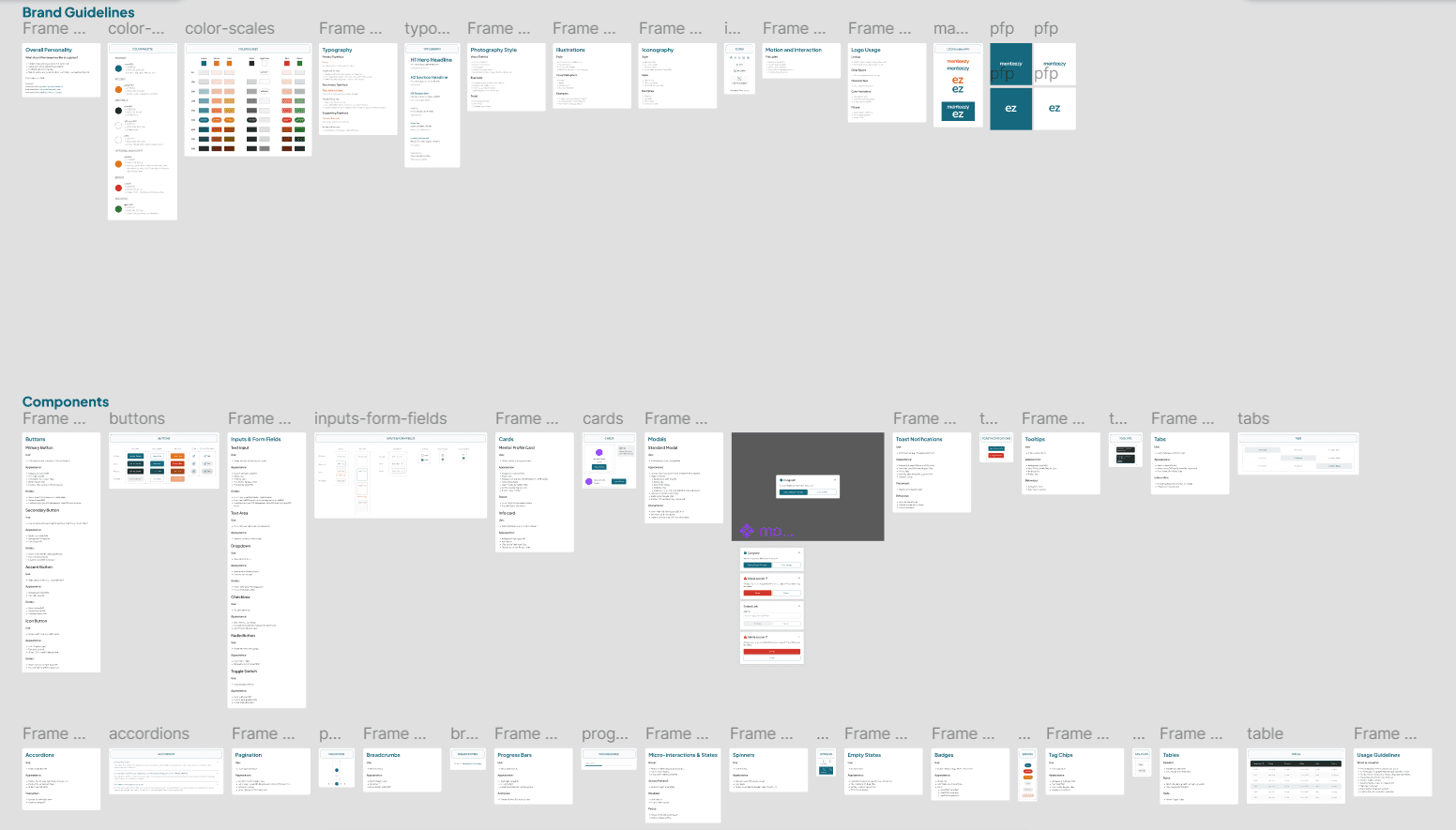
Instead of jumping into screens, I first created a lightweight design system. This included: typography, color variables, spacing, buttons, forms, cards, modals, navigation, etc.
Although intentionally lightweight, it created enough consistency for the MVP while remaining easy to expand later.
Course Creation Flow
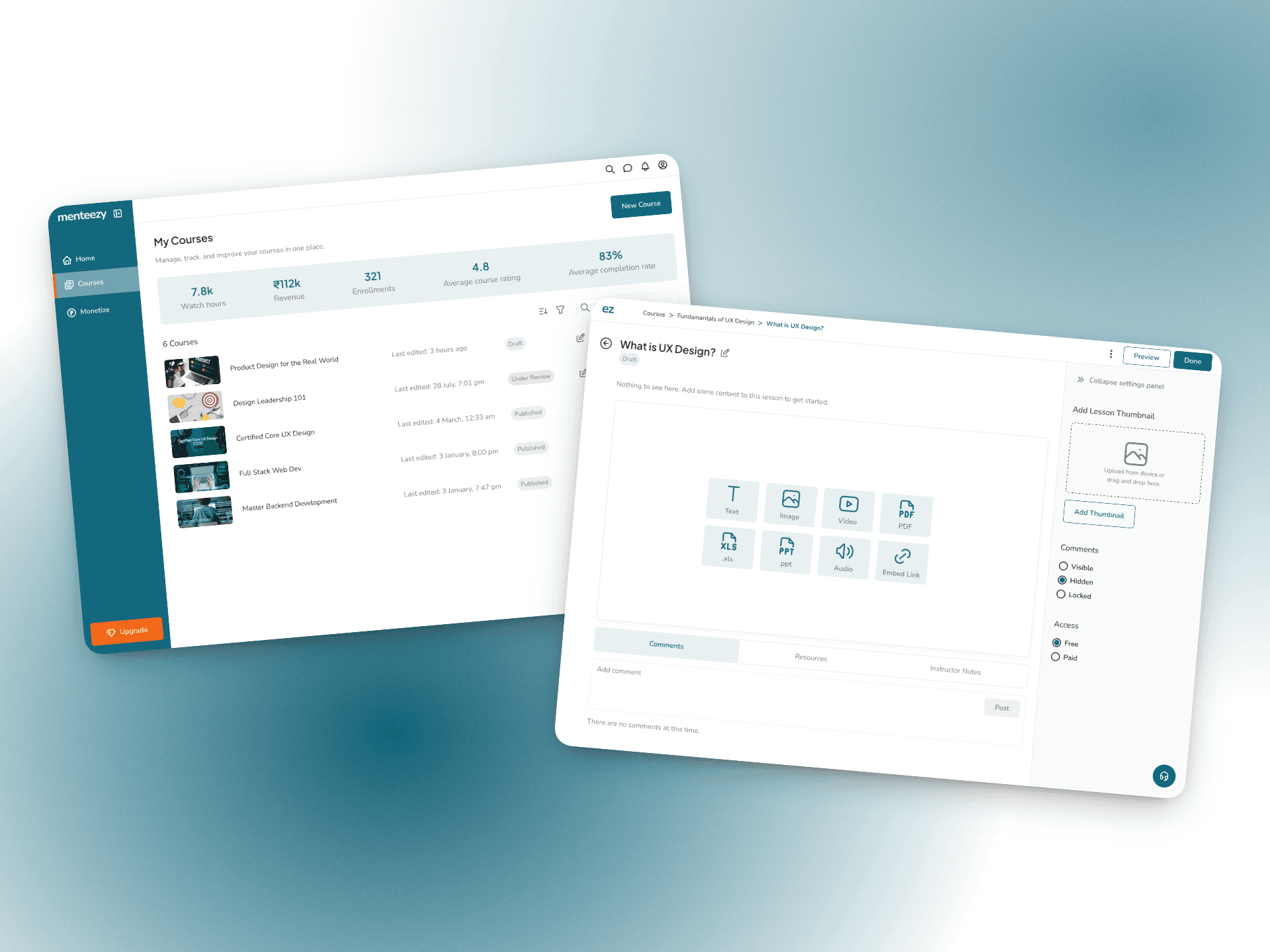
Starting with low-fidelity wireframes, I explored different ways mentors could:
create courses
organize modules
upload learning resources
preview information
publish content
After validating direction internally, these workflows were translated into high-fidelity interfaces.
Onboarding in Parallel
While the engineering team built the application, we also needed mentors entering the pipeline.
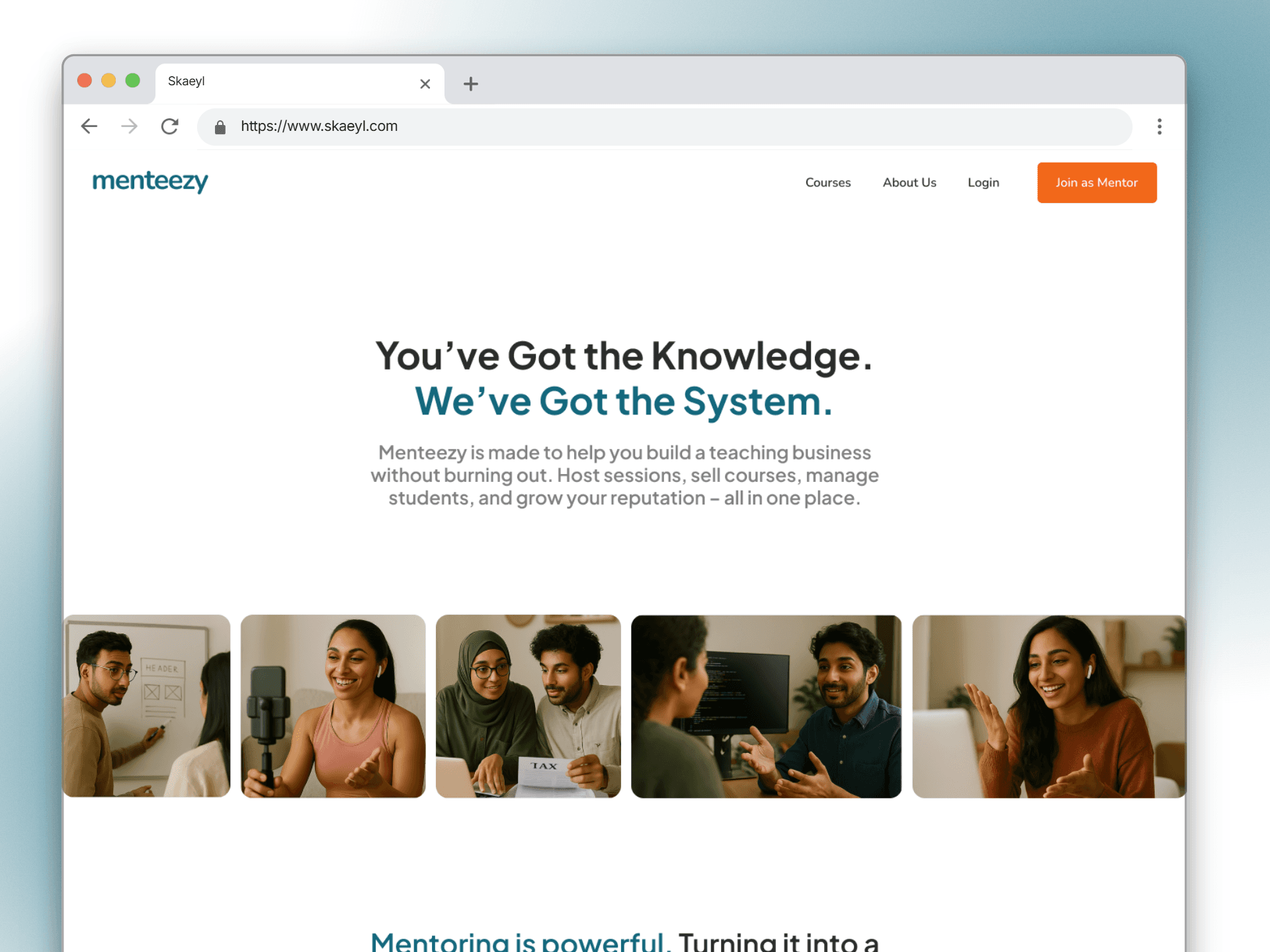
To support launch, I designed:
landing page
waitlist signup
onboarding forms
This allowed marketing to begin collecting potential mentors before the platform was publicly available.
Working With Constraints
Product direction evolved almost weekly.
Every design decision balanced:
Founder vision
↓
Engineering feasibility
↓
Launch speed
↓
Future scalability
Instead of designing ideal workflows, we continuously adapted the MVP around what could realistically ship.
Deliverables
✔ Brand foundations
✔ Design tokens
✔ Component library
✔ Low-fidelity wireframes
✔ High-fidelity product
✔ Landing page
✔ Waitlist flow
Outcome
Delivered a complete mentor-facing MVP ready for development.
Created a reusable design foundation for future mentor tools.
Enabled parallel product validation through a waitlist website before launch.
Maintained consistency with the existing student platform while establishing a distinct product identity.
Project Links
Figma Design File: